
experience inside the most important Western Initiatic Tradition
18 volumes
The Morning Star series

THE COMPLETE SERIES OF
THE MORNING STAR MAGAZINE
VOL. 1 – THE OPEN GOLDEN DAWN
VOL. 2 – INTELLECTUAL FIRES
VOL. 3 – MAGES IMAGES
VOL. 4 – TOWARDS THE MORNING STAR
VOL. 5 – A STAR IN SIGHT
VOL. 6 – THE LAW OF MALKVTH
VOL. 7 – THE BEAT HOTEL
VOL. 8 – THE ENTERER
VOL. 9 – TOWARDS THE SECOND ORDER
VOL. 10 – BLACK MADONNA
VOL. 11 – HIGH DEGREES
VOL. 12 – ILLUMINATI
VOL. 13 – UNDER THE SHADOWS OF MARS
VOL. 14 – JUPITER’S THUNDER
VOL. 15 – MYSTERY IN DAATH
VOL. 16 – BAPHOMETH
VOL. 17 – INVISIBLE CONNECTIONS
VOL. 18 – ANDROGINITY
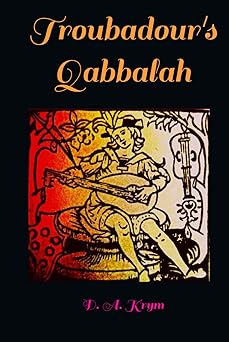
Troubabour’s Qabbalah – a book “about too much Messiahs”
A speculative and unconventional historical essay. It explores the idea that a “cosmopolitan religion” was conceived by the people, though it doesn’t specify when, how, or by whom this occurred, as the essay seems to be investigating these very questions.
Key Elements and Scope of the Essay
The essay uses a “troubadouric language” to connect seemingly disparate historical and religious concepts with the feeling of music and magic.
- Ancient History and Mythology: It delves into the stories of the Patriarchs before the flood, a pre-Israelite sacerdotal line, and the myth of the Ten Lost Tribes.
- The Diaspora and Mysticism: It traces the Eastern Diaspora, the Exilarchate, and the influence of Kabbalah on Sufi mystical traditions. This connection is explored in the context of Umayyad Spain and its impact on music and poetry.
- European Development: The essay links these esoteric and mystical traditions to the development of the European Renaissance and early Enlightenment, suggesting a hidden lineage of thought that influenced modern philosophy.
- The Role of “False-Messiahs”: A central theme is the reinterpretation of so-called “false-Messiahs.” The author posits that these figures represent a continuous tradition, rather than a deviation from it, and that they embody a spiritual pursuit of liberty and awareness.
- Modernity and Occultation: The essay extends its analysis to modern times, using political analogies to understand how art reflects society. It also explores an “obscurantist line” that sought to suppress these spiritual and intellectual movements.
The book is an ambitious and unorthodox attempt to trace a hidden spiritual history that runs parallel and different to mainstream narratives, challenging conventional social science approaches by weaving together mythology, mysticism, and political history.
And now, music:
 Fondazione M
Dil ki gali mein, shaam sehle dhal gayiTum na aaye, roshni bhi bujh gayiTanha main baitha hoon, yaadon ke darmiyanGeet ban ke dil se, nikle har zubaan(Chorus)Tu hai kahan, meri jaan, ab aajaTere bin, soona har lamha, har jahaanTere bin, soona har lamha, har jahaan(Verse 2)Phool khile hain, par khushboo udaas haiChaand nikla, par usmein bhi pyaas haiAankhon mein meri, ek hi sawaal haiKab hoga tera, mujhse woh pyaar hai(Chorus)Tu hai kahan, meri jaan, ab aajaTere bin, soona har lamha, har jahaanTere bin, soona har lamha, har jahaan(Bridge)Waqt ki saansein, dheere-dheere tham rahiTujhse milne ki, umeed bhi kam rahiPhir bhi yeh dil, ik aas liye baitha haiShayad tu aaye, aur gale se lagaye(Chorus)Tu hai kahan, meri jaan, ab aajaTere bin, soona har lamha, har jahaanTere bin, soona har lamha, har jahaan
interesting… is an African song or an Indian one?
….is it a blues to open the doors?